
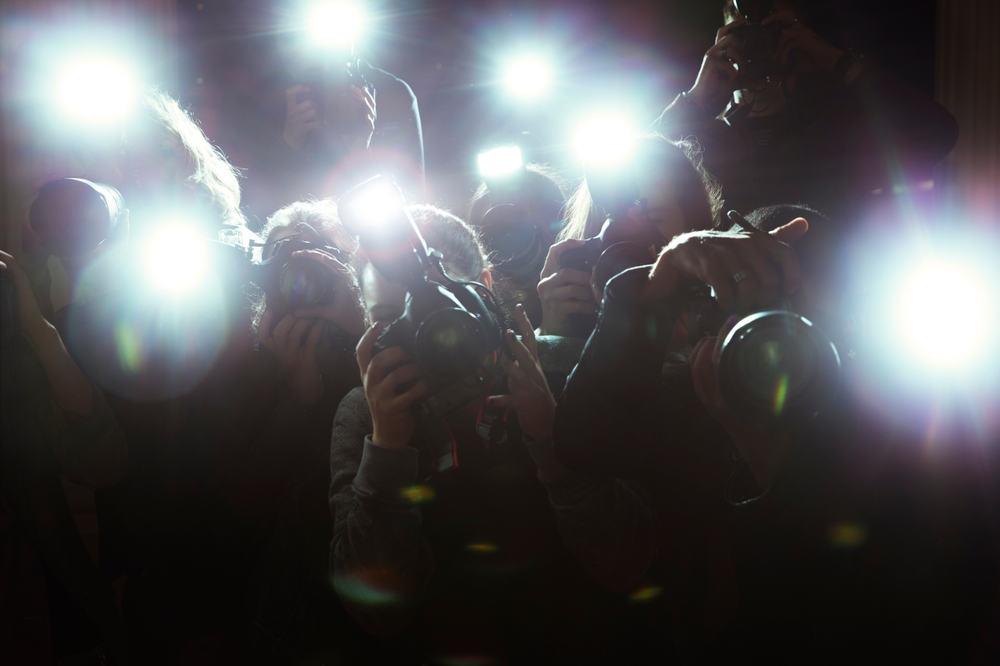
A protective detail that ends up in the frame of someone’s phone video has usually already lost half its advantage. The entire purpose of high-profile protection services is to move a client through an airport terminal, a hospital entrance, a restaurant or a fundraiser with minimal friction and no footage worth posting. Done correctly, the people around you never register that anyone was working.
That outcome is not luck. It comes from advance planning, disciplined arrival procedures and a personal protection team in the Hamptons who understand that being noticed is a tactical cost.
What a Low-Profile Detail Actually Looks Like
Most people picture earpieces, dark suits and a wedge formation pushing through a crowd. That posture has a place at a scheduled public appearance where visible deterrence is the point, but it is the wrong tool roughly nine times out of ten for daily movement.
A low-profile detail usually looks like one or two people dressed for the venue, standing slightly off the client’s shoulder, carrying nothing that reads as equipment. The difference shows up in these choices:
- Dress to the environment, not to a uniform standard. A suit in a beach club draws more attention than a polo.
- Spacing over formation. Agents work at conversational distance rather than in a visible box, closing only when a threat indicator appears.
- No radio chatter in public. Discreet earpieces and text-based coordination replace visible comms.
- Separate arrivals. Advance personnel are already inside before the client’s vehicle turns in.
- Clean vehicles. No blacked-out convoy, no matching SUVs, nothing that signals a motorcade.
Clients who have run both styles usually notice the same thing: the quiet version produces fewer strangers approaching, fewer phones raised and fewer posts geotagging their location within the hour.
Advance Work Decides How Visible You Are
Almost every photograph of a protected person in distress happens during a transition: car to door, lobby to elevator, table to exit. Advance work exists to shrink those transitions to a handful of seconds.
For a restaurant dinner, a proper advance typically takes 30 to 60 minutes on site and covers the parking approach, the service entrance, the table position, the path to the nearest exit and the location of the closest trauma kit or AED. For a multi-day trip, advance teams often work 24 to 72 hours ahead of the client’s arrival, depending on how many venues are on the itinerary.
The questions a good advance answers before you ever arrive include:
- Which entrance has the fewest sightlines from the street and no permanent paparazzi position?
- Where do the valet stage vehicles, and can the detail keep the car within 20 feet of the door?
- Who on venue staff knows the client is coming, and can that list be cut down?
- What is the route to the nearest emergency department, and how long does it take at that time of day?
- Is there an event photographer, a livestream or a press list nobody mentioned?
That last question catches more exposures than any other. Private events leak through vendors, venue social media accounts and guests far more often than through organized media.
The Thirty Seconds Between Car and Door
Arrivals are where protection either disappears or becomes the story. A few habits make the difference, and none of them require a larger team.
Keep the vehicle moving until the door is confirmed open and the interior path is clear, rather than idling at the curb while someone checks. Idle time at a curb is when crowds form and when a stationary subject becomes an easy target for a camera or anything worse. Agents who exit first and hold a door open with an outstretched arm create a visual that reads as a motorcade; stepping out naturally and walking beside the client does not.
Valet stands, rope lines and hotel lobbies deserve particular caution because they concentrate strangers, phones and staff turnover in one place. When a venue cannot offer a controlled entrance, the realistic fix is usually a time change rather than more personnel.
How Executive Security Guards Blend Into a Room
The best executive security guards spend most of an event doing something that looks like nothing. They position with their back to a wall, keep a line of sight on both the client and the primary entrance, and avoid the two behaviors that give detail away: scanning the room in obvious sweeps and standing perfectly still while everyone else moves.
Training matters more than presence here. Agents drawn from law enforcement and military backgrounds tend to read crowd behavior earlier, which means interventions happen at the conversation stage rather than the physical stage. A guest who gets redirected politely at 15 feet never becomes an incident anyone films.
Medical capability belongs in the same conversation. Details that include personnel trained as EMTs, paramedics or first responders handle the most statistically likely emergency, a cardiac or allergic event, without waiting on a 911 response. The American Heart Association notes that survival odds fall sharply for every minute without CPR, which is a stronger argument for medically trained agents than most threat scenarios.
Digital Habits That Expose Your Location
Physical protection fails quietly when the itinerary is already public.
Several patterns consistently cause problems for clients who otherwise run careful operations:
- Real-time posting by family members, assistants or guests, including stories that show recognizable interiors.
- Reservation names that are actual names, or that repeat across cities and become searchable.
- Private aviation tracking, which is publicly accessible unless a blocking request is filed.
- Vendor confirmations emailed to shared or assistant inboxes with full schedules attached.
- Repeating patterns, such as the same gym at the same hour four days a week.
Federal guidance on suspicious activity reporting from the Department of Homeland Security is written for the general public, but the underlying logic applies to protected clients too: predictable behavior is the easiest thing to exploit, and most hostile surveillance is noticed by someone who already knew what normal looked like.
Choosing Security Services That Protect Privacy Too
When you evaluate security services for discreet work, the credentials that matter are not the ones most firms lead with. Ask who is actually standing next to you, what their background is and whether they have done protective work at the level you need.
Hampton Protection Group LLC was founded by an active law enforcement officer who has been a police officer since 2005 and completed SWAT school in 2008. His protective experience covers high-level United States government officials, presidential candidates and dignitaries, along with celebrities, VIPs and high-net-worth clients carrying significant risk profiles. That background shapes how details are staffed: quiet by default, with specialized capability in active shooter response, counter-terrorism, firearms and defensive tactics available on request.
Confidentiality should be written into the engagement, not promised verbally. As the firm puts it, “At Hampton Protection Group LLC we respect and value your privacy above all and are committed to providing you with the highest level of personalized service.”
Frequently Asked Questions
How Many Agents Does a Discreet Detail Require?
Most low-profile details run one to three agents for routine movement, with four or more reserved for large public events or higher threat conditions. The number depends less on the client’s profile than on the venue: a controlled private residence may need one agent, while a hotel ballroom with 400 guests and multiple entrances usually needs a team plus an advance.
Does Hiring Protection Make Me Look More Important and Attract Attention?
It can, if the detail is staffed and dressed for visibility, which is why plainclothes positioning and separate arrivals exist. Properly run protective work reduces attention because agents absorb the interactions, such as autograph requests or aggressive approaches, that would otherwise create a scene.
What Is the Difference Between Private Protection and Executive Protection?
Private protection generally covers individuals and families in personal settings, while executive protection focuses on corporate principals during business travel, offices and public appearances. In practice the skills overlap heavily, and many firms including Hampton Protection Group LLC staff both from the same trained pool of agents.
How Far in Advance Should I Book Coverage?
Two to four weeks is comfortable for travel involving multiple venues, though short-notice coverage is often available within 24 to 48 hours. Last-minute requests limit advance work, which usually means accepting a more visible posture at arrivals.
Are Protective Agents Armed in Public Venues?
That depends on state licensing, venue policy and the threat assessment, and many discreet assignments are handled unarmed by design. Venues such as courthouses, schools, stadiums and federal buildings have their own restrictions that are confirmed during the advance.
Talk With Hampton Protection Group LLC About Discreet Coverage
If you have travel, an event or a daily routine that needs protection without visibility, Hampton Protection Group LLC can scope a detail around your schedule and privacy requirements. Contact our team today!