
Armed vs. Unarmed Executive Protection: How to Determine the Right Model for Your Threat Profile
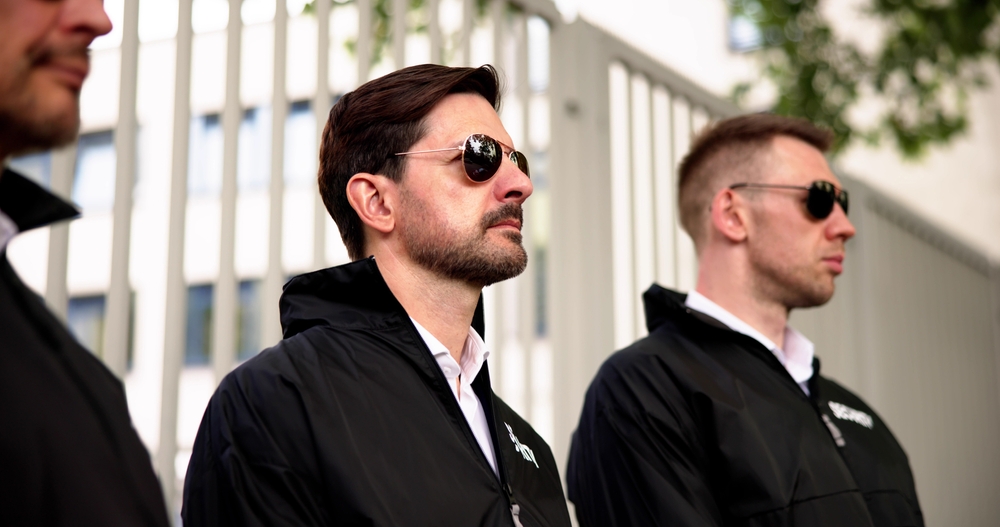
The choice between armed executive protection and an unarmed detail should come out of a written threat assessment, not a gut feeling about how dangerous the world feels this quarter. A principal who travels to three countries a month with a public earnings schedule carries a different risk profile than a founder who works from one office in a low-crime suburb. Both may need executive protection services, but the correct posture, team size and weapons policy can look nothing alike.
Below is the framework most protection professionals actually use to make that call, including the licensing differences, the cost spread and the situations where a firearm solves nothing. Hampton Protection Group LLC provides discreet armed executive protection in The Bronx to safeguard high-profile individuals and corporate executives operating in the borough.
What Separates the Two Models in Practice
Armed and unarmed agents do roughly 90 percent of the same work: advance planning, route selection, venue surveys, access control, crowd management and getting the principal out of a developing problem before it matures. The firearm only matters in the narrow slice of incidents where lethal force is legally justified and tactically necessary.
What changes more than the sidearm is the training floor behind it. Armed bodyguards carry additional state licensing, qualification schedules, insurance exposure and use-of-force liability that the client inherits by association. New York, for example, requires armed security licensees to complete a 47-hour firearms training course on top of the 8-hour pre-assignment and 16-hour on-the-job training all guards must finish.
Unarmed bodyguards operate on deterrence, positioning and evacuation. A well-run unarmed detail is not a downgrade; in venues where weapons are prohibited outright, it is the only lawful option on the table.
Five Factors That Decide Which Posture Fits
- Documented threat history. Direct threats, stalking behavior, a fixated individual with a known pattern of approach, or prior physical contact push a profile toward armed coverage quickly.
- Predictability of movement. Published speaking schedules, court appearances, earnings calls and litigation-related travel make a principal findable, which raises exposure.
- Environment. Crime statistics for the specific blocks around a hotel, office or venue matter far more than city-wide averages.
- Venue and jurisdiction rules. Courthouses, schools, federal buildings, stadiums, hospitals and most international destinations restrict or forbid carry, and some corporate campuses do too.
- Optics and the client’s business goals. A visible armed detail at a donor dinner or a school pickup can create the exact attention the principal is trying to avoid.
Score those five honestly and the answer usually presents itself before anyone debates calibers.
Where Unarmed Coverage Is the Stronger Call
A low-visibility, unarmed protection detail tends to be the right fit for corporate principals with no credible direct threat, family and school-run coverage, hospital visits, and travel into jurisdictions with strict firearms law. It also fits clients whose primary concern is privacy intrusion, aggressive media or unwanted contact rather than violence.
Unarmed agents handle the majority of real-world incidents, which are far more often verbal confrontations, trespass, intoxicated approaches and medical emergencies than armed assaults. That last category is why training beyond the basics matters so much. Our agents include personnel trained in CPR, first response, EMT and paramedic work, and a cardiac event at a conference is statistically far more likely than an attack.
Where Armed Coverage Earns Its Place
Armed agents make sense when the threat assessment shows a specific, identified adversary with the capability and stated intent to cause harm. Think litigation with a history of violent rhetoric, a terminated executive making threats, high-value asset transport, or a public figure whose name has surfaced in extremist chatter.
Travel into high-crime corridors, late-night movements, residential standoffs and detail work around activism or politically charged events also justify it. The FBI’s active shooter research shows how compressed these events are: most resolve in a handful of minutes, which is why advance planning, exit mapping and trained response matter more than reaction time at the moment of contact.
One rule holds across every assignment: an armed agent who cannot articulate the legal standard for using force in that state should not be in the detail.
The Layered Model Most Clients Actually Use
In practice, the majority of protection programs are mixed rather than purely one or the other. A common structure places an unarmed personal agent in close proximity to the principal, with armed support operating in the vehicle, at the perimeter or in the residence.
That layering keeps the close contact discreet while keeping capability within reach. It also lets the posture flex by segment of the day: unarmed at the school event at 3 p.m., armed on the 9 p.m. transfer through an unfamiliar part of the city.
Supporting elements often sit underneath the detail, including surveillance, guest and vendor screening, canine sweeps for explosive detection, and residential coverage. Those layers frequently do more to reduce risk than adding another body with a firearm.
Frequently Asked Questions
Is Armed Protection Always Safer Than Unarmed?
No. In roughly the majority of protective incidents, which involve verbal confrontation, trespass or medical emergency, a firearm plays no role at all and can add legal exposure. Safety comes from advance work, positioning and the agent’s judgment, with the weapon as a last-resort tool for a narrow set of circumstances.
How Many Agents Does a Typical Detail Require?
Most individual principals are covered by one to two agents per shift, while public events, residential coverage and multi-vehicle movements commonly require four or more. Coverage hours drive the count as much as threat level does, since 24-hour protection needs at least three shift rotations.
How Long Does a Threat Assessment Take?
A baseline assessment generally takes 24 to 72 hours, longer when it includes open-source research, residence surveys and travel advances. Urgent situations can be covered immediately with an interim posture while the full assessment is completed.
Talk Through Your Threat Profile With Hampton Protection Group LLC
Contact Hampton Protection Group LLC to send the specifics of your schedule, travel and any contact history, and we will tell you plainly whether armed coverage is warranted or whether a discreet unarmed detail accomplishes the same goal.